Why does engineered stone cause silicosis?
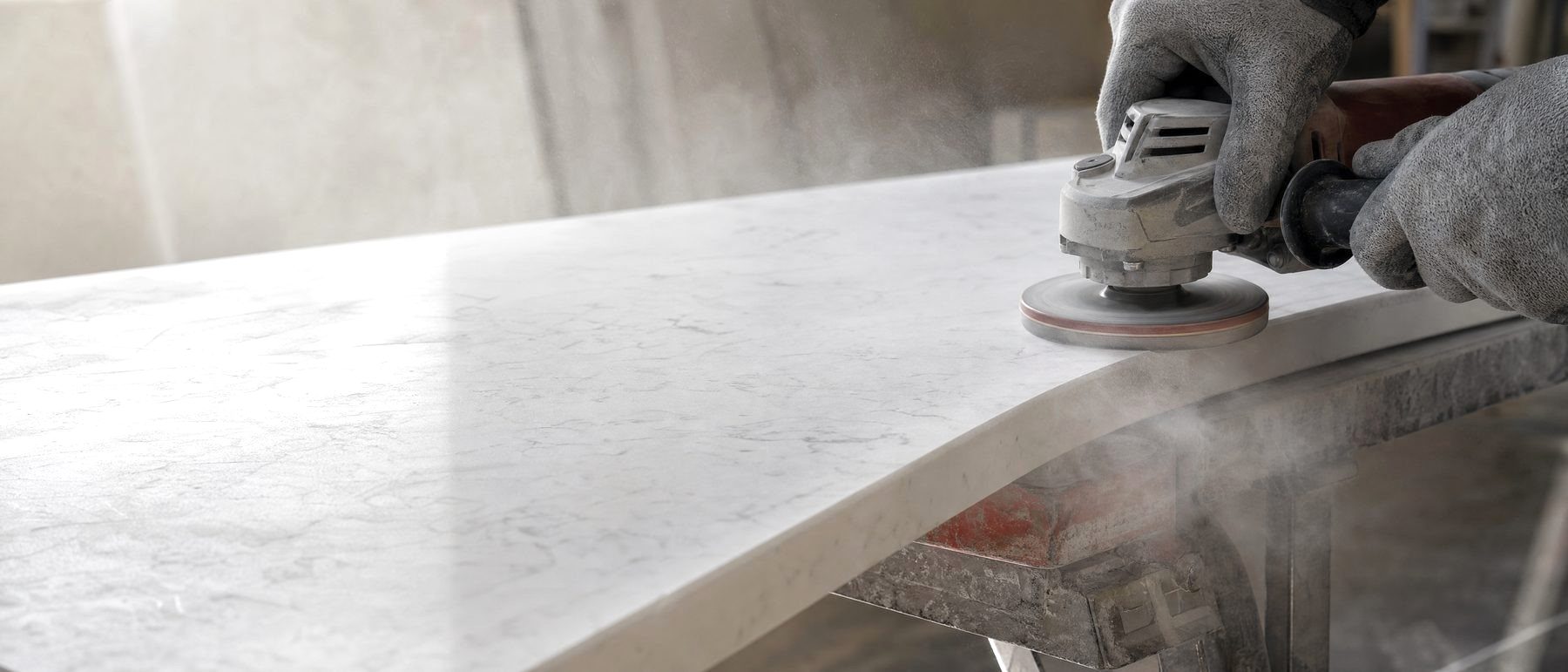
The answer to engineered stone silicosis is simple and harsh: engineered stone is made almost entirely of silica. Cutting, grinding, polishing or installing engineered stone can expose workers to silica dust, which can cause silicosis when breathed in.
Cutting engineered stone: two ways to make a claim
Workers' comp
Through the insurance your employer has, workers' comp pays for treatment and part of any pay you lost, fault or no fault.
A lawsuit against the slab manufacturers
The companies that made the slabs can be named in a lawsuit. A Los Angeles jury found slab manufacturers at fault in August 2024 and awarded $52.4 million. See the cases against Cambria, Caesarstone and Cosentino (Silestone).
- workers in California with a silicosis diagnosis tied to engineered stone, from January 2019 through June 2026
- 592
- of them went on to need a lung transplant
- 65
- the average age among workers who died
- Under 50
- of inspected stone shops had a worker above the legal limit
- 51%
Sources: NEJM Evidence, California Department of Industrial Relations, NIOSH.
An engineered stone slab is more than 90% crystalline silica, in most cases. The dust given off by cutting is respirable, with particles fine enough to settle deep inside the lungs. The disease that follows is silicosis, and once it takes hold, the damage cannot be undone.
Can quartz countertops cause silicosis?
Yes, though mainly for the workers who handle them. The danger is greatest for fabricators, because tasks such as cutting, grinding, polishing or installing artificial stone send silica dust into the air, and breathing that dust in can lead to silicosis. "Quartz" is just one label for the same material. Others include artificial stone and manufactured stone.
Silicosis does not stop once it starts, and there is no cure. If you work with this stone in California and are worried about safety, you can call Cal/OSHA and speak with a live representative in English or Spanish.
Who qualifies to claim, and by when?
- Eligible to claim
- Workers diagnosed with silicosis who cut, polished, ground or installed engineered stone.
- If a worker died of silicosis, the family can claim through a wrongful death lawsuit or workers' comp death benefits.
- By when
Your state and the route you choose set the deadlines. The deadline for workers' comp often begins when a doctor links your illness to your work, and lawsuits have their own time limits, so check both early.
Written notice to your employer in California is due within 30 days, and you have one year to file the claim itself.
Silicosis cases among countertop fabricators
In early 2019, California reported the first two US fabricators of engineered stone countertops to die of silicosis, along with 4 more cases. The count has climbed fast since then.
Court cases have been brought by sick workers and their families, and a law firm that advertises on Silicosis Claims offers a free claim review by phone, in English or Spanish. Only a handful of worker silicosis lawsuits have made it to trial, but most of those ended with multimillion-dollar verdicts for the workers or their families. In August 2024, the country's first verdict arrived: a Los Angeles jury gave a stone worker $52.4 million and held three slab manufacturers responsible.
There is also workers' compensation, which runs separately from lawsuits. Every state runs its own system, and our page on workers' compensation lists the agency for yours.
How much dust is too much?
There is a legal ceiling on how much silica dust a worker may breathe at work, called the permissible exposure limit. Respirable crystalline silica has its own number: 50 micrograms per cubic meter of air. That limit is an average across an eight-hour workday, and keeping under it doesn't promise you'll stay healthy. During inspections, 51% of stone fabrication shops had one or more employees above the limit.
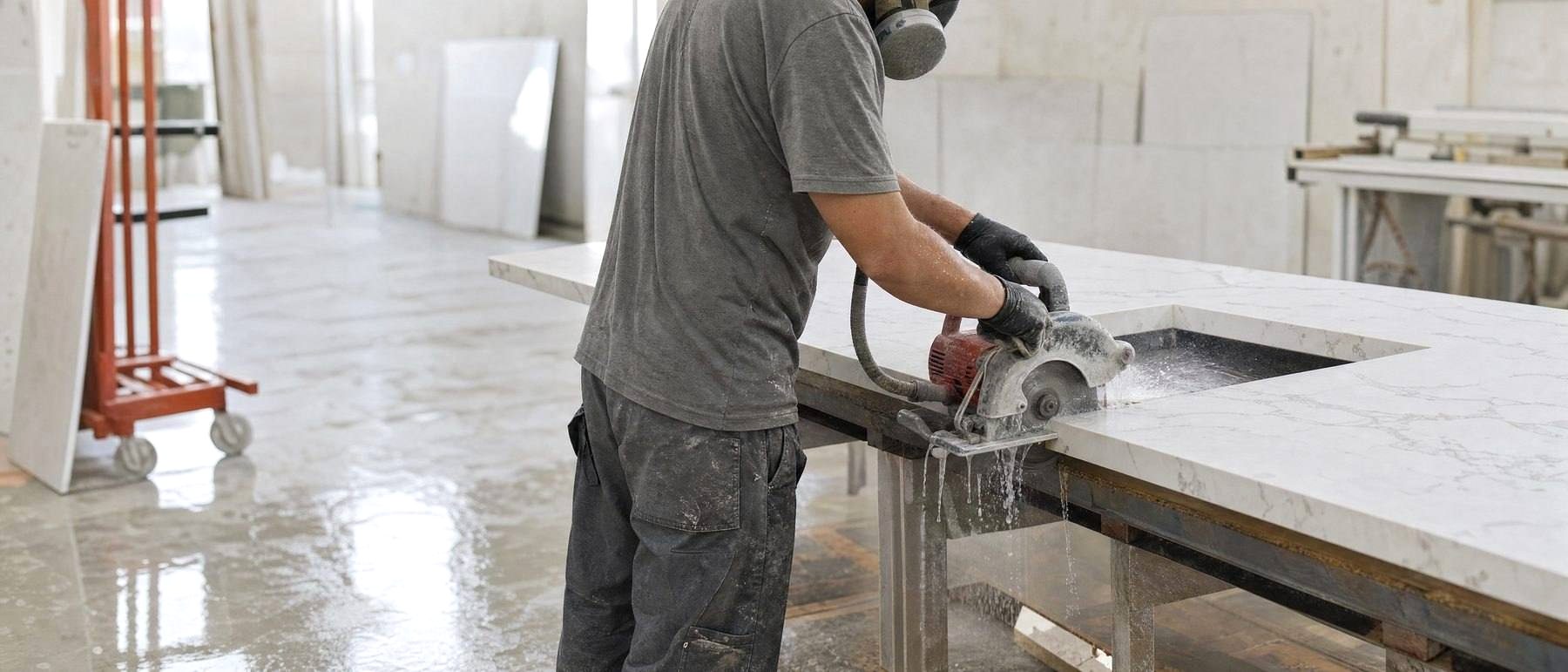
There are effective ways to control the dust: cutting wet, tools that remove dust as they work, and local exhaust ventilation. Even so, illness can still strike in shops that comply with California's current rules, which forbid dry cutting and require stronger breathing protection, so those measures alone do not guarantee safety.
Warning signs after you have cut stone
Accelerated silicosis can be caused by heavy engineered stone dust, and it appears 5 to 10 years after the exposure, sooner than the usual form. At first, you may have no symptoms at all; a cough, shortness of breath and tiredness appear later.
If cutting stone is your job, tell your doctor about it and ask if a chest X-ray or a CT scan is needed (silicosis testing).
Silicosis in California
When it comes to counting this disease in the industry, California is the only state doing it. Roughly 98% of those diagnosed are Latino men. In a separate count reported by Public Health Watch, of the 542 confirmed cases tallied by April 8, 279 were in Los Angeles County, which is more than half.
Cal/OSHA has run more than 140 inspections since December 2023.
- violations turned up in those inspections
- 580+
- in penalties assessed by Cal/OSHA
- $1.8 million
- shops given stop-work orders for dry cutting or poor breathing protection
- 26
Source: Public Health Watch, April 2026.
Has your shop been cited? Look up employers in the citation records.
A permanent silica standard took effect in California in February 2025, and employers who fabricate artificial stone are legally required to follow it. Silicosis now counts as a serious illness under Senate Bill 20, signed into law in October 2025. No worker is excluded from Cal/OSHA's protection, no matter their immigration status.
Is a ban on engineered stone coming?
California has started the process of banning it. California's Standards Board voted unanimously to accept a petition to outlaw fabricating and installing artificial stone containing more than 1% crystalline silica. Cal/OSHA and board staff concluded that current protections fall short.
Here is how Cal/OSHA's draft rule would work, per KQED:
- Shops would have nearly 6 months from the rule's start to phase out engineered stone.
- For stone already bought or contracted for, employers would get 180 days to use it up.
- Shops would need to warn workers in English and in Spanish that the material is dangerous and not allowed.
- Once a 2-month grace period passes, inspectors could order shops still using it to halt work.
KQED listed Sept. 30 as the deadline for public comments on the draft. No ban applies in California until a final rule is adopted. Cal/OSHA projects that, without a ban, roughly 1,000 more cases will surface in California over 2 years.
Australia's ban and timeline
Australia moved first: since 1 July 2024 it has been illegal there to fabricate or install engineered stone benchtops, panels and slabs, apart from certain work on stone already in place, and since 1 January 2025 imports have been banned too. Roughly 1,000 people there are estimated to have been harmed by the outbreak.
| Date | What happened |
|---|---|
| 13 December 2023 | Ministers agreed to prohibit engineered stone |
| 1 July 2024 | Nationwide ban on working with engineered stone benchtops, panels, and slabs |
| 1 September 2024 | Tougher rules for any material containing at least 1% silica in crystalline form |
| 1 January 2025 | Imports of benchtops, panels, and slabs no longer allowed |
Legacy stone is engineered stone that was already installed. Workers may still pull it out, fix it, make minor changes, or throw it away, as long as the dust is kept controlled. Any worker who believes there is a serious health risk has the right to halt or decline the job.
Questions people ask
Is silicosis a risk when cutting granite?
Granite and other natural stone can contain silica as well. In California, the silica rules also apply to any natural stone that contains more than 10% crystalline silica, so engineered stone is not the only material covered.
Do any engineered stones avoid crystalline silica?
Yes. Several big manufacturers now use amorphous silica instead, a different form of the mineral that is considered safer for the people who cut stone.
Are sinks and ornaments included in Australia's ban?
No, they are not. Items that are not meant to be cut or shaped, like prefabricated sinks, jewellery, and garden ornaments, sit outside the ban.
Have silica citations happened outside California?
Yes. Official records list 44 employers across 15 states cited since August 2019. Washington leads with 11. Of the total, 25 are stone or countertop shops.