
What is accelerated silicosis?
Accelerated silicosis is scarring in the lungs caused by silica dust, and it shows up after roughly 5 to 10 years of heavy exposure rather than the 10 or more years the slow form takes. Silica is the tough mineral found in sand, rock, and stone. When you cut or grind those materials, the dust that comes off is fine enough to travel deep into the lungs and stay there. The scarring cannot be undone, and that is why this illness weighs so heavily on anyone who spent only a few years in countertop shops, foundries, or masonry work.
Comparing the 3 types
Doctors sort silicosis by how long someone breathed the dust before getting sick. Doctors call this waiting time the latency period. Accelerated and chronic silicosis look the same on scans. According to NIOSH, they are distinguished by how long the illness takes to develop after exposure.
| Type | Typical time from first dust exposure until illness | Amount of dust |
|---|---|---|
| Acute | Weeks to a few months, generally within 5 years | Very high |
| Accelerated | Often 5 to 10 years, at times just 2 | High |
| Chronic | A decade or more | Lower, across a long career |
Figures vary a bit by source. The Cleveland Clinic lists 2 to 5 years for accelerated cases, and a medical case report gives 5 to 15. Whatever the source, the rule underneath is the same: breathe more dust, wait less time for symptoms.
Why does it develop so fast?
It comes down to how much dust you breathe. More silica reaching the lungs each day means scarring starts sooner and spreads faster.
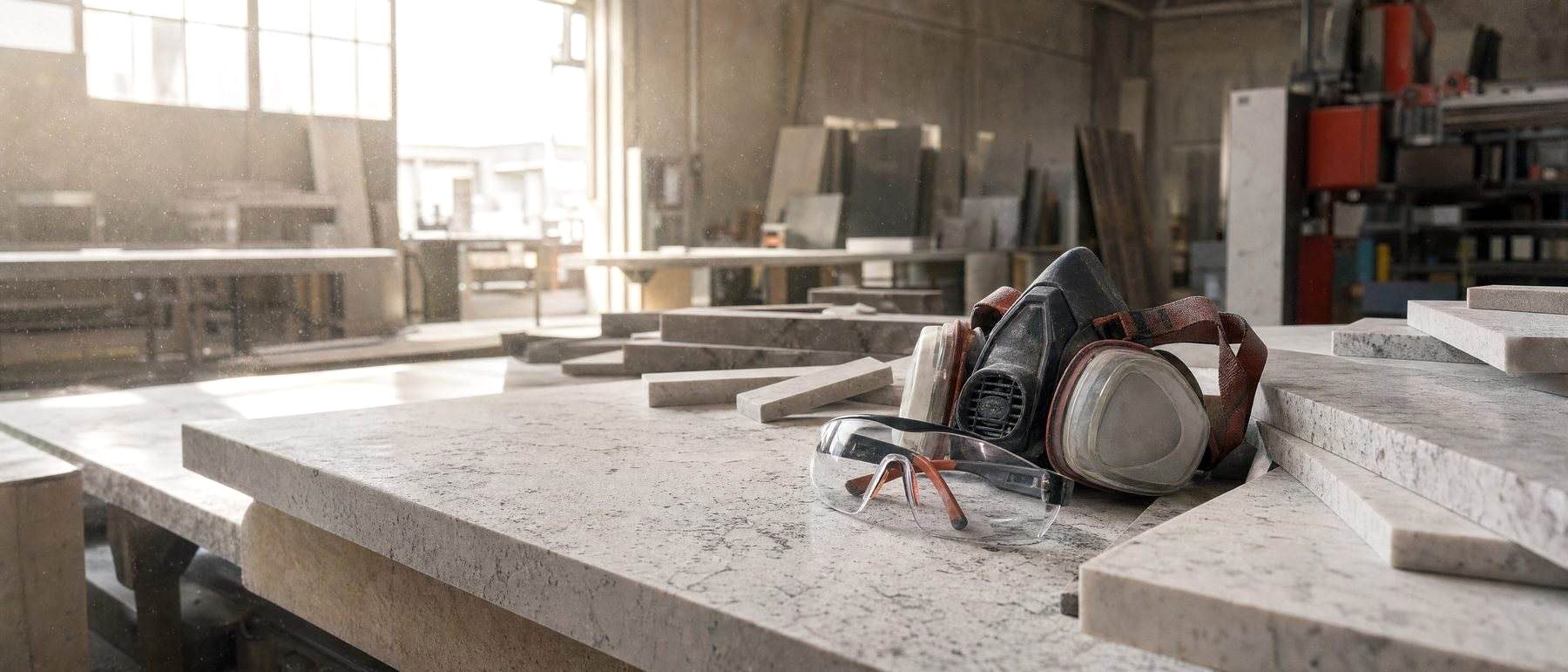
Engineered stone, the quartz used in many kitchen countertops, is a big driver behind the recent jump in cases. It can hold over 90% silica. Natural granite sits under 45%, according to a CDC report. A 2009 inspection in California measured dust at one worker's shop at 22 times the legal limit back then.
Masks do not always protect as well as hoped. One 39-year-old countertop cutter came down with accelerated silicosis even though his employer handed him a respirator. Dust found its way in.
Acute silicosis: illness within weeks or months
Acute silicosis is the rarest, fastest form. It can show up after only weeks or months of breathing very high dust levels, as NIOSH explains, generally inside of 5 years.
It follows extremely heavy dust exposure. Because it moves so fast, anyone with recent heavy dust work who develops a cough or breathlessness should get to a doctor without delay.
Chronic silicosis after many years on the job
This is the form doctors see most often. It appears after 10 or more years around smaller amounts of silica dust, in jobs like mining, foundry work, masonry, and stone cutting.
Because it grows slowly, plenty of people feel nothing until late in their working years or after them. Still, it is the same disease, and once it starts it can keep progressing and turn severe.
How is accelerated silicosis diagnosed?
A doctor starts by learning whether you worked around silica dust, because scans alone cannot show where the scarring came from. Shortness of breath during exertion and a cough that will not quit are the most common symptoms.
A chest X-ray can reveal silicosis, but an HRCT scan, a detailed CT picture of the lungs, catches early changes that a plain chest X-ray can overlook. The most advanced stage goes by the name progressive massive fibrosis, where small scars join together into big masses. One Washington worker in the CDC report reached that stage and was sent for a lung transplant evaluation.
Silica work also raises the odds of tuberculosis, lung cancer, kidney disease, and certain autoimmune diseases, so your doctor may also test for these conditions.
Care and what lies ahead
There is no cure, and scars in the lung cannot be reversed. Treatment focuses on stopping any further exposure, which often means switching jobs, and on easing symptoms. Symptoms can be managed, and some people may need a lung transplant.
How things go depends on how far the disease has advanced. According to one medical review, people with accelerated cases may live less than 4 years once symptoms appear, though the Cleveland Clinic says some patients go on 10 to 20 years or more after diagnosis. Finding it early through regular checkups truly matters, because cutting off exposure early limits how far the scars go.
Who's getting sick, and where?
A CDC report on stone fabrication counted 18 cases across 4 states, 2 of them fatal. Most of them, 11 out of 18, were younger than 50, and two California fabricators died at 38 and 36. In Colorado, 2 workers fell ill from dust they breathed while doing housekeeping duties, not cutting.
The problem reaches beyond the United States. Screening of 1,053 engineered stone workers in Queensland, Australia turned up silicosis in 204 of them, roughly 19%, per bpac.
Public records since August 2019 name 44 employers in 15 states cited for silica dust by OSHA, by Cal/OSHA or by Washington's Department of Labor and Industries. 25 of them are stone or countertop shops. Washington has the most (11), then California (7) and Georgia (6). Workers' compensation is run separately by each state, and a work injury claim begins with the agency for your state.